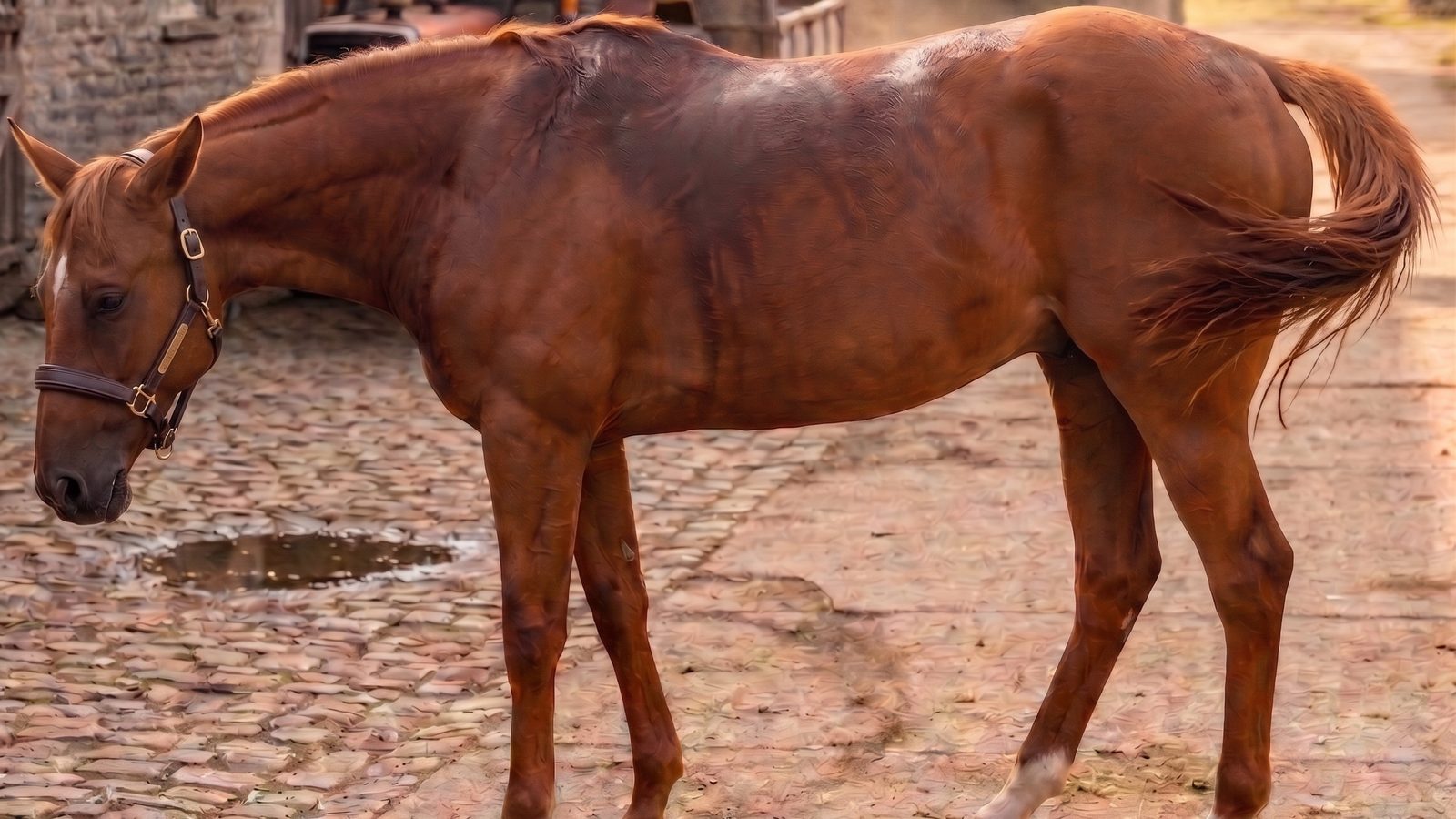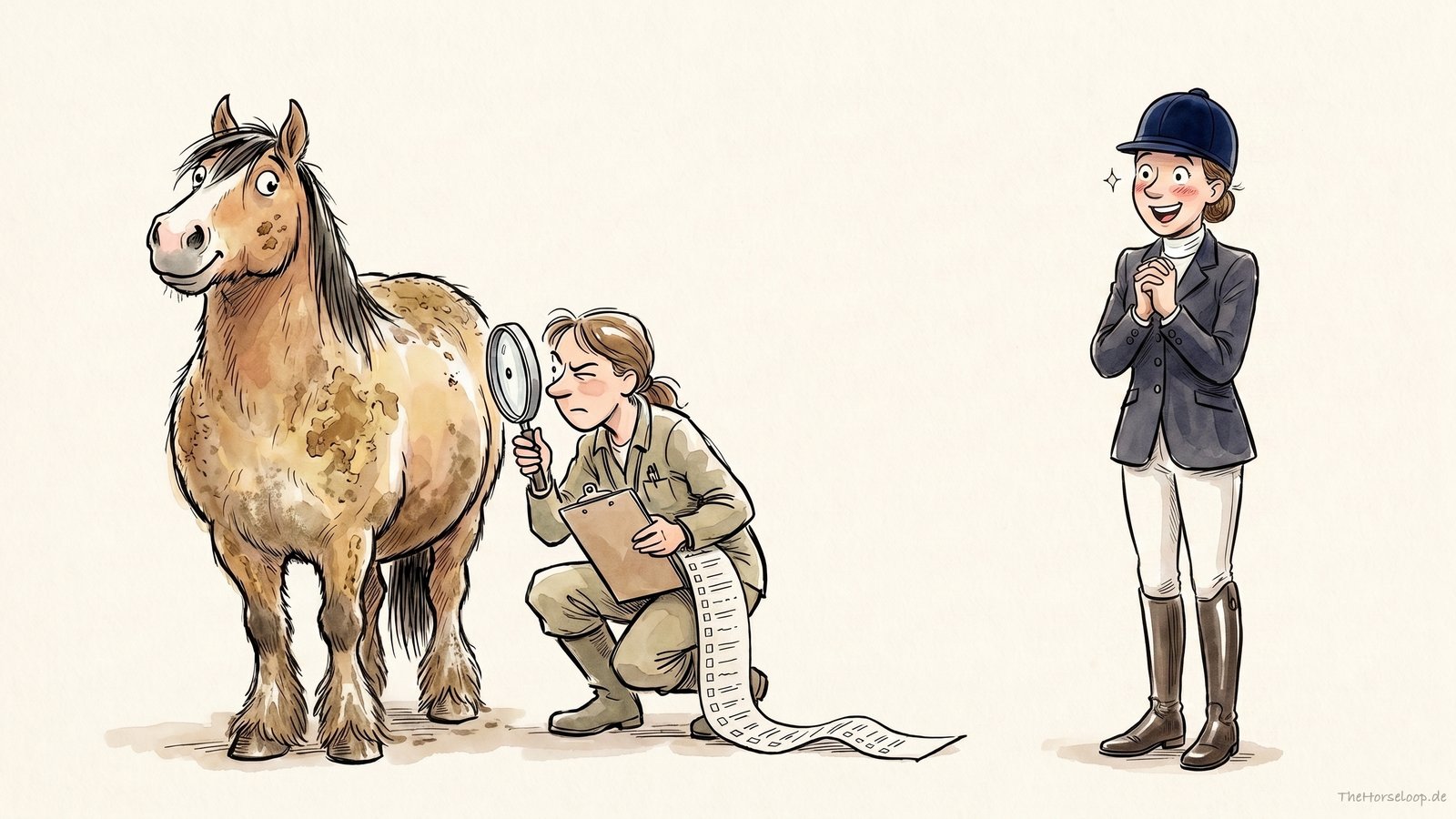
The pre-purchase exam (PPE): the centerpiece
The PPE is a veterinary exam that documents a horse's current health and usability at the time of purchase. Important from the start: it is a snapshot and a risk assessment, not a prognosis for the next ten years and not a guarantee.
The clinical exam
The general clinical and movement exam is the core of every PPE, whether “basic” or “extended.” It includes:
- Visual inspection and palpation: The vet looks at the horse standing, palpates the limbs, tendons, joints, back and hooves, and checks the hooves for sensitivity to hoof testers.
- Heart, lungs, eyes: Listening to the heart and lungs at rest (and ideally after exercise), examining the eyes, checking the mucous membranes and lymph nodes.
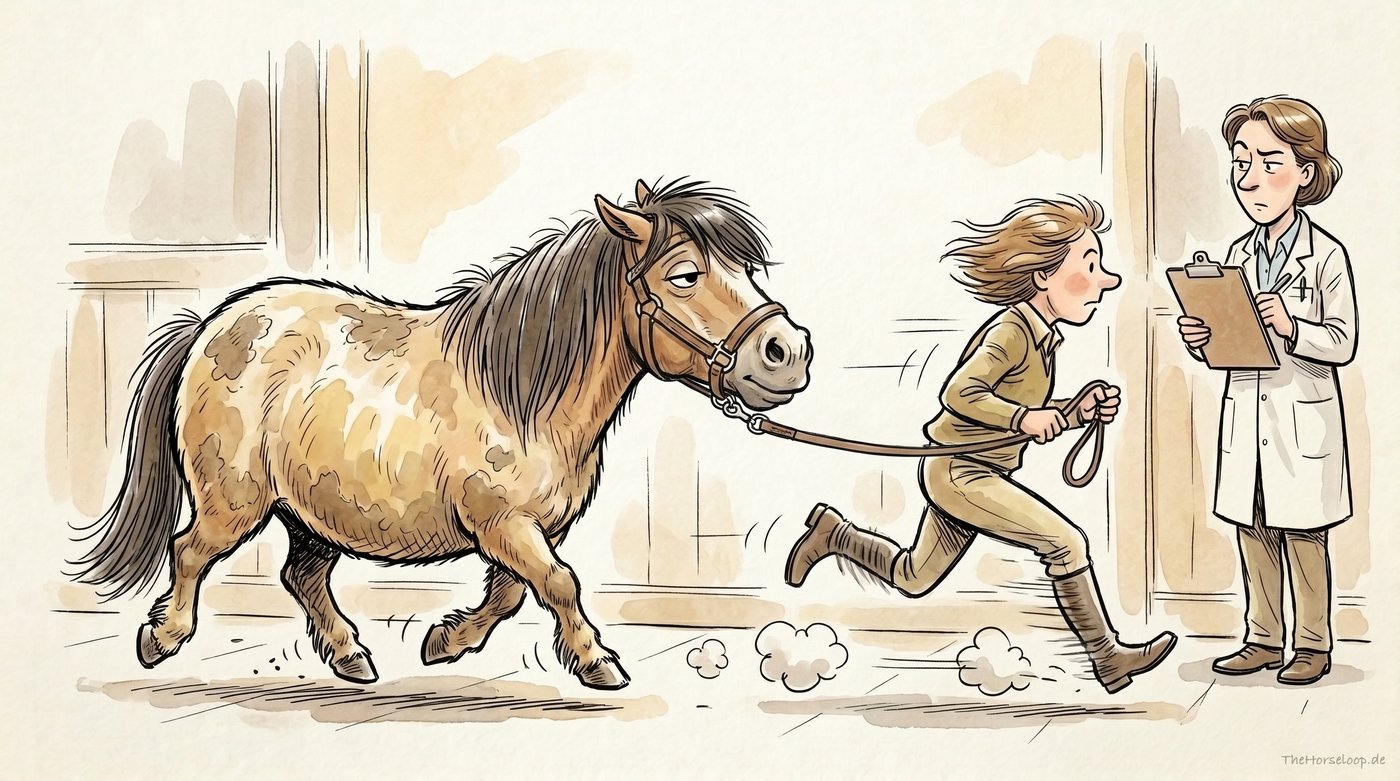
- Movement exam: Trotting up in hand on hard and soft ground, on the lunge line in both directions and, where possible, under saddle, to assess rhythm, footfall and signs of lameness.
- Flexion tests (provocation tests): The entire limb is held in flexion for about a minute, after which the horse should trot off without lameness from the first step, on all four legs. Key point: In the pre-purchase exam, the complete limb is flexed on purpose, not a single joint. Targeted flexion of a single joint belongs in a lameness exam, when a specific suspicion needs to be clarified. Increased lameness is a sign, not proof: In a study of 100 clinically sound horses, the flexion test under standardized conditions was positive in over 60% of the horses (mild in about half of those), and over a longer period the result could not be reliably repeated [7]. A positive finding is therefore a reason to look more closely, but not an exclusion criterion.
Basic vs. extended PPE
The terms are common practice, not a protected standard. Always clarify the scope in writing with the vet beforehand.
- Basic PPE (German: kleine AKU): clinical exam, usually with no X-rays or only a few basic ones.
- Extended PPE (German: große AKU): extensive X-rays (since April 1, 2026, 22 images as standard), supplemented depending on the question by endoscopy of the upper airways, ultrasound, a blood sample or further imaging.
There is no reliable, publicly verified statistic on costs. They depend on the German fee schedule for veterinarians (GOT), the actual scope of the exam and the region. Since the expansion to 22 standard images in April 2026, the extended PPE has tended to become more expensive. Always ask for a written cost estimate before the appointment instead of relying on rules of thumb.
Who commissions the PPE?
In principle, the client can be either the buyer or the seller. The contract for the exam exists between the client and the vet. That is not a formality: The vet owes the information to the client, and the commission also regulates who gets to see the findings at all (keywords: veterinary confidentiality and data protection). In the classic pre-purchase exam, this creates a three-way relationship between seller, buyer and vet.
For you as the buyer, this means: If possible, commission and pay for the exam yourself and choose a vet who has no ties to the barn or the seller. Only then is the result a neutral assessment in your interest.
X-rays: what has changed with the Röntgen-Leitfaden
This is the most common misunderstanding when buying a horse. Many people still talk about “radiographic class I” or “II,” but this classification has been outdated for years. With the 2018 Röntgen-Leitfaden (German radiographic guideline) of the Gesellschaft für Pferdemedizin (GPM), the formerly seven radiographic classes (four classes and three intermediate classes) were dropped without replacement. Since then, only radiographic findings that deviate from normal radiographic anatomy are listed [1]. This move away from the school-grade system still applies today, since April 1, 2026 in the version of the Röntgen-Leitfaden 2026, which has completely replaced the 2018 guideline [2].
At the same time, the standard scope was expanded from 18 to 22 images. The four additional images concern the fetlock joints, which since April 2026 are also X-rayed in the 0° projection, because a three-dimensionally built joint cannot be assessed reliably from only one projection direction [2].
Today, each individual finding is described and placed in context for its possible significance, but no longer forced into a rigid class. The guideline documents findings associated with a risk of lameness (explicitly marked “risk” in the catalog), findings for which this risk cannot be reliably assessed, and marked deviations that the catalog does not list at all. Normal radiographic findings and anatomical variants, on the other hand, are not documented in the first place. The guideline explicitly applies to sound warmblood horses aged three and older in the context of a pre-purchase exam. Clarifying unclear or suspicious findings is not part of the scope of the pre-purchase exam and has to be commissioned separately [2].
The core message: An X-ray finding is a risk assessment, not a diagnosis. This is well established. In the cervical spine, morphological variants of the vertebrae, osteoarthritis and osteochondral fragmentation are common even in asymptomatic horses [4]; individual findings, such as osteochondrosis dissecans (OCD) of the facet joints, also occur in clinically healthy horses [3]. The same pattern applies to the back: In a study of 102 Thoroughbreds with no perceived back problems, narrowing and contact were detected in a third of the examined interspinous spaces, with no difference between unridden yearlings and trained horses [6].
Typical findings that show up in the PPE and need to be assessed in a differentiated way include isolated osteochondral fragments (colloquially “chips”) and OCD (cartilage-bone disorders), changes to the navicular bone (navicular region), bone spavin in the low-motion (distal) hock joints, changes to the proximal sesamoid bones, and cyst-like lesions in the pastern bone and cannon bone. The guideline explicitly lists the cyst-like lesions close to the joint as a risk finding [2]. They are considered difficult to treat and can cause lameness if the cyst breaks through into the joint. Whether such a finding matters for your planned use can only be judged by your vet in the context of the clinical picture. An isolated X-ray finding says little on its own.
One point surprises many buyers: X-ray findings of the cervical, thoracic and lumbar spine, including kissing spines, are deliberately not listed in the 2026 Röntgen-Leitfaden. The GPM explains this by saying that so far no scientifically robust findings exist on the clinical relevance of such findings in clinically unremarkable warmblood horses, and that, as a result, there is also no veterinary indication for such images in a clinically unremarkable horse [2]. If you want images of the back or neck, you have to order them separately and discuss their informative value with your vet beforehand. One more point speaks against “better to X-ray everything”: Radiation protection also limits the scope.
Genetic testing before you buy: worthwhile depending on breed
Genetic tests are not a must for every horse, but depending on breed and intended use they are a smart addition, especially if breeding plays a role. A test shows a genetic trait, and what that means for your horse depends first on the mode of inheritance. For dominantly inherited traits (PSSM1, HYPP, MH), a single copy is enough for your horse to be affected; whether and how strongly symptoms appear also depends on feeding, management and other genes (incomplete penetrance). For recessively inherited traits (WFFS, HERDA, GBED, SCID, lavender foal syndrome), a heterozygous carrier (a horse with one copy) is healthy. Here, only the breeding decision matters.
Useful tests by breed (a selection, not a complete list):
- PSSM1 (GYS1 mutation): relevant mainly for Quarter Horses, Paint Horses and many draft horse breeds. It affects muscle metabolism and is inherited dominantly: one copy is enough for your horse to be affected. Because the trait is incompletely penetrant, in practice many carriers stay well rideable with low-starch, low-sugar feeding and regular exercise. How common the mutation is depends heavily on breed: In a study of North American and European breeds, it was found in 11 breeds, at a frequency between 0.5 and 62.4%. Among others, in Thoroughbreds, Connemaras, Welsh ponies and Icelandic horses it was not found in the samples examined, though that does not guarantee it is absent from these breeds [8].
- WFFS (Warmblood Fragile Foal Syndrome): mainly important for warmblood breeding. The defect in the PLOD1 gene is inherited recessively: A heterozygous carrier (a horse with one copy) is healthy, and the actual risk only arises when two carriers are bred together. And this is not a niche issue: in a study of 4,081 horses from 38 breeds, the average carrier frequency across the 1,610 warmbloods tested was 11%, and in Hanoverians and Danish Warmbloods about 17% [9].
- MH (malignant hyperthermia): mainly in the Quarter Horse, with particular significance for anesthesia risks.
- HYPP (Impressive line), HERDA, GBED in Quarter Horse and Paint Horse lines, and SCID and lavender foal syndrome in Arabians and Arabian-influenced lines.
When choosing tests, use reputable, specialized labs (e.g., university or established veterinary genetics labs) and always interpret the results in the context of the clinical exam. A carrier status often means something completely different for rideability than for breeding.
Conformation with a health focus
Conformation, the horse's body structure, is a risk tendency, not destiny. Certain traits can statistically raise the likelihood of later problems, but they do not guarantee them.
What matters with a view to health:
- Hoof and limb alignment: Toed-out or toed-in stances and club feet can distribute load unevenly and thereby promote long-term wear (such as ringbone or osteoarthritis).
- Back and saddle position: An unfavorable back shape can mean a predisposition to problems in the area of the dorsal spinous processes (kissing spines tendency) and affects saddle fit.
- Neck and lower cervical region: Abnormalities at the transition of the lower cervical vertebrae are increasingly discussed (keyword ECVM, an anatomical variant). The evidence is limited here, though, more so than the debate suggests: A study of warmblood horses found no association between congenital variants of the ventral laminae of the sixth and seventh cervical vertebrae and clinical signs or other radiographic findings of the cervicothoracic region [10]. So take such a finding seriously, but don't treat it as a diagnosis.
- Harmony and balance: A well-balanced overall picture distributes load more evenly.
- Body condition (BCS): Clear over- or underweight skews any assessment. A rough estimate of the body condition score is part of the first impression.
During the trial ride and presentation, you look at rhythm, signs of lameness, rideability, breathing and unusual respiratory noises, as well as behavior and character. A rule of thumb from practice: if possible, see the horse several times on different days. A single good day is not a reliable basis.
Legal matters: information, not legal advice
Important note up front: This section provides general information and does not replace legal advice. In an actual dispute, there is no way around an attorney who specializes in equine law.
As a general rule, a horse is legally an animal but is treated under purchase law by the rules for goods. A written purchase contract with a precise description of the horse and expressly guaranteed characteristics is the most important protection. The PPE documentation later serves as evidence of the horse's condition at the time of purchase.
On warranty, the key question is who is selling:
- Consumer goods sale (seller is a business/dealer, buyer is a consumer): A statutory reversal of the burden of proof applies in the buyer's favor.
- Private sale (private individual to private individual): Excluding the warranty is common and permitted within the limits of the law.
One often overlooked special rule applies to buying animals. In consumer goods sales, it has been presumed since 2022 for one year that a defect that appears already existed at handover. For live animals, lawmakers expressly did not adopt this extension: here it stays at six months from transfer of risk (§ 477 para. 1 sentence 2 BGB) [5]. After that, you as the buyer must prove yourself that the defect already existed at purchase, which is hardly feasible in practice with a living creature that keeps changing. The statutory limitation period for claims for defects is two years from handover (§ 438 para. 1 no. 3 BGB); by contract it can differ, for example in a private sale with a warranty exclusion. In short: time is a legal factor when buying a horse. Because statutes and case law can change, the current status should be checked by an attorney in each individual case.
The popular phrase “bought as seen” (“as is”) is also legally less clear-cut than many believe. Depending on how the contract is drafted, it is interpreted narrowly, in which case it excludes only defects that an average buyer without expertise could have spotted during a normal viewing, or broadly, especially in combination with an express warranty exclusion clause. The law does draw a hard line in every case: a seller cannot rely on a liability exclusion if they fraudulently concealed a defect or gave a guarantee of condition (§ 444 BGB). Rescission of a purchase or possible veterinary liability are complex special cases. Here too: legal advice first, then action.
Your buying checklist
- Initial viewing: See the horse several times and on different days: overall impression, behavior, handling.
- Trial ride: Check rhythm, rideability, breathing and character, ideally several times.
- Commission the PPE: Set the scope (basic/extended) in writing beforehand, choose an independent vet, get a cost estimate.
- Genetic tests: add targeted tests depending on breed and purpose (PSSM1, WFFS, MH, HYPP and others).
- Contract: in writing, with a clear description and guaranteed characteristics; keep the PPE report.
- If in doubt: bring in veterinary and legal expert advice.
Bottom line
A good horse purchase is the result of systematic risk reduction: the PPE as a neutral snapshot, genetic tests where the breed suggests them, an honest conformation assessment and a clean contract. Remember one sentence above all: a finding, whether on X-ray or in conformation, is a probability, not a diagnosis. Anyone who internalizes this distinction and seeks expert advice when in doubt makes a much better decision.
Frequently asked questions about buying a horse
What happens during a pre-purchase exam?
The core is always the general clinical and movement exam: The vet looks over and palpates your horse, listens to the heart and lungs, examines the eyes, mucous membranes and lymph nodes, and checks the hooves for sensitivity to hoof testers. In the movement exam, your horse is shown in hand on hard and soft ground, on the lunge line in both directions and, where possible, under saddle, and flexion tests are added. Depending on the scope, X-rays and, on request, endoscopy, ultrasound or a blood sample complete the picture. Always agree on the exact scope in writing with your vet beforehand.
What is the difference between a basic and an extended pre-purchase exam?
These terms are a practice convention without a protected standard, so you should clarify the scope in writing beforehand. The basic exam covers the clinical examination, usually with no X-rays or only a few basic ones. The extended exam includes extensive X-rays, since April 1, 2026 a standard of 22 images, and depending on the question, additionally endoscopy of the upper airways, ultrasound, a blood sample or advanced imaging [2].
How much does a pre-purchase exam cost for a horse?
There is no reliable, publicly verified statistic on this. Costs depend on the German veterinary fee schedule (Gebührenordnung für Tierärzte, GOT), the actual scope of the exam and the region. Since the expansion to 22 standard images in April 2026, the extended exam has tended to become more expensive. So always get a written cost estimate before the appointment instead of relying on rules of thumb.
Who commissions and pays for the pre-purchase exam?
In principle, either the buyer or the seller can commission the exam, because the contract for the exam is between the client and the vet. As the buyer, you should commission and pay for the exam yourself if possible, and choose a vet with no ties to the barn or the seller. Only then is the result a neutral assessment in your interest.
Which X-rays are part of the pre-purchase exam?
Since April 1, 2026, the standard scope is 22 images, previously 18 [2]. The four additional images concern the fetlock joints, which are now also X-rayed in the 0° projection, because a three-dimensionally built joint cannot be reliably assessed from a single projection direction [2]. Images of the cervical, thoracic and lumbar spine, including for kissing spines, are deliberately not listed in the 2026 Röntgen-Leitfaden and must be ordered separately [2].
Do the German radiographic classes I to IV still exist?
No, that classification is outdated. With the 2018 Röntgen-Leitfaden, the formerly seven radiographic classes were scrapped without replacement, and since then only findings that deviate from normal radiographic anatomy are listed [1]. This move away from the school-grade system still applies in the version of the 2026 Röntgen-Leitfaden, which has completely replaced the 2018 guideline [2]. A single radiographic finding today is a risk assessment, not a diagnosis.
Which genetic tests make sense before buying a horse?
That depends on breed and intended use, especially if breeding plays a role. Depending on the line, PSSM1 in Quarter Horses, Paint horses and many draft horse breeds, WFFS in warmblood breeding, MH and HYPP in Quarter Horse lines, and SCID or lavender foal syndrome in Arabians can be relevant, for example [8][9]. The mode of inheritance matters: With recessive traits, a carrier with one copy is healthy itself, and the question is about the breeding decision, while dominant traits can affect your horse itself. Always have the findings interpreted in the context of the clinical exam.
Can you withdraw from a horse purchase, and how long do you have?
Reversing a purchase is a complex special case where legal advice comes first and action second. What matters is who sells: In a consumer goods sale (Verbrauchsgüterkauf), meaning dealer to consumer, it has been presumed since 2022 for live animals, for only six months from transfer of risk, that a defect already existed at handover (§ 477 para. 1 sentence 2 BGB) [5]. After that, you have to prove yourself that the defect already existed at the time of purchase. The statutory limitation period for claims for defects is two years from handover (§ 438 para. 1 no. 3 BGB), and contractually it can differ, for example in a private sale with an exclusion of warranty [5].
What should a horse purchase contract include?
A written purchase contract with a precise description of the horse and expressly warranted characteristics is the most important protection, and the pre-purchase exam documentation later serves as evidence of the horse's condition at the time of purchase. Note who is selling: In a private sale, from private party to private party, an exclusion of warranty is common and permissible within the limits of the law. A seller cannot rely on a liability exclusion, however, if they fraudulently concealed a defect or gave a guarantee of condition (§ 444 BGB) [5]. This section does not replace legal advice, and in a dispute there is no way around a specialist attorney in equine law.
What does a positive finding in a flexion test mean?
A positive finding is a sign, not proof, and not an exclusion criterion. In a study of 100 clinically non-lame horses, the flexion test came out positive in over 60% under standardized conditions, and in about half of those only mildly. Over a longer period, the result was not reliably repeatable [7]. A positive finding is therefore a reason to look more closely. In the pre-purchase exam, the entire limb is deliberately flexed. Targeted single-joint flexion belongs in the lameness exam.
Sources
- [1] Gesellschaft für Pferdemedizin (GPM) - Röntgen-Leitfaden (2018). Leitfaden für die röntgenologische Beurteilung des Pferdes im Rahmen einer Kaufuntersuchung. (Historical, replaced on April 1, 2026.) https://www.bundestieraerztekammer.de/tieraerzte/leitlinien/downloads/171020_GPM-Roentgen-Leitfaden.pdf
- [2] Gesellschaft für Pferdemedizin (GPM) - Röntgen-Leitfaden (2026). Leitfaden für die röntgenologische Untersuchung und Befundung von Pferden in der tierärztlichen Kaufuntersuchung. In force since April 1, 2026. ISBN 978-3-00-086308-0. https://gpm-vet.de/images/GPM_Roentgen_Leitfaden_2026.pdf
- [3] Hellige M, Geburek F - Bildgebende Verfahren an der Halswirbelsäule des Pferdes - Teil 1: Röntgen. Tierärztl Prax Ausg G Grosstiere Nutztiere 2025;53(2):109–119. doi:10.1055/a-2557-0115. PMID 40233774. https://pubmed.ncbi.nlm.nih.gov/40233774/
- [4] Dash RF, Morgan RE - Should cervical radiographs be included in a pre-purchase examination? Equine Vet Educ 2024;36(7):366–374. doi:10.1111/eve.13941. https://doi.org/10.1111/eve.13941
- [5] Bürgerliches Gesetzbuch (German Civil Code) - § 477 para. 1 sentence 2 BGB (reversal of the burden of proof, special period for live animals), § 438 para. 1 no. 3 BGB (limitation period) and § 444 BGB (limits of liability exclusions). https://www.gesetze-im-internet.de/bgb/__477.html
- [6] Pressanto MC, Pepe M, Coomer RPC, Pilati N, Beccati F - Radiographic abnormalities of the thoracolumbar spinous processes do not differ between yearling and trained Thoroughbred horses without perceived back pain. J Am Vet Med Assoc 2023;261(6):844–851. PMID 36933209. https://pubmed.ncbi.nlm.nih.gov/36933209/
- [7] Busschers E, van Weeren PR - Use of the flexion test of the distal forelimb in the sound horse: repeatability and effect of age, gender, weight, height and fetlock joint range of motion. J Vet Med A Physiol Pathol Clin Med 2001;48(7):413–427. PMID 11599679. https://pubmed.ncbi.nlm.nih.gov/11599679/
- [8] McCue ME, Anderson SM, Valberg SJ et al. - Estimated prevalence of the Type 1 Polysaccharide Storage Myopathy mutation in selected North American and European breeds. Anim Genet 2010;41(Suppl 2):145–149. PMID 21070288. https://pubmed.ncbi.nlm.nih.gov/21070288/
- [9] Reiter S, Wallner B, Brem G et al. - Distribution of the Warmblood Fragile Foal Syndrome Type 1 Mutation (PLOD1 c.2032G>A) in Different Horse Breeds from Europe and the United States. Genes 2020;11(12):1518. PMID 33353040. https://pubmed.ncbi.nlm.nih.gov/33353040/
- [10] Dyson S, Phillips K, Zheng S, Aleman M - Congenital variants of the ventral laminae of the sixth and seventh cervical vertebrae are not associated with clinical signs or other radiological abnormalities of the cervicothoracic region in Warmblood horses. Equine Vet J 2025;57(2):419–430. PMID 38938125. https://pubmed.ncbi.nlm.nih.gov/38938125/
All medical statements in the text are linked to the corresponding source in this list with inline markers [N]. This article does not replace advice from your vet.