What is colic? The most common emergency in horses
Colic is the umbrella term for abdominal pain in horses [3]. The annual incidence varies by population between 3.5 and 10.6 cases per 100 horse-years [2][6][7][8]. That makes colic one of the most common life-threatening emergencies in equine practice. Keep in mind that colic is a symptom that can have many different causes.
A horse's anatomy makes it especially prone to colic: the gastrointestinal tract, at about 30 meters in length, is only partly suspended freely in the abdominal cavity. The duodenum, cecum and rectum are fixed by mesenteries and ligaments, while the large intestine is freely suspended. This very mobility raises the risk of displacements and twists. The narrowest point is the pelvic flexure in the large intestine, which is where most impaction colics occur. The small stomach (only 7.5–15 liters) is the reason horses cannot vomit: if it is overloaded, a life-threatening stomach rupture is a risk.
Causes: spasm, gas, impaction or displacement
The good news: most colics can be treated with medication and heal without lasting effects. The most common forms of colic are:
Spasmodic colic (spastic colic): The intestinal muscles cramp, often triggered by stress, a sudden change of diet (in German) or a change in the weather. The pain can be severe, but it usually responds quickly to treatment.
Gas colic (flatulent colic): Excessive gas formation from hard-to-digest feed or a disturbed gut microbiota. The intestine bloats painfully.
Impaction colic: Feed material backs up in the intestine, mostly at the pelvic flexure of the large intestine. Causes are dehydration, too little forage, poor dental care or too much sand in the feed.
Sand colic: A less common form in Germany, but regionally relevant, especially on sandy soils. Sand accumulates in the large intestine over months and can cause severe impactions or irritation of the mucous membranes there. A risk factor is sandy pasture or paddock ground, especially when the grass is short.
Displacement and torsion: The intestine shifts out of its normal position or twists. These forms of colic are life-threatening and usually require emergency surgery. Strangulations (cut-off blood supply) are among the most severe forms of colic [5].
Recognizing the symptoms: what you can see
Spotting colic quickly saves lives. The signs vary with the intensity of the pain, but these symptoms should alarm you [3]:
Early warning signs:
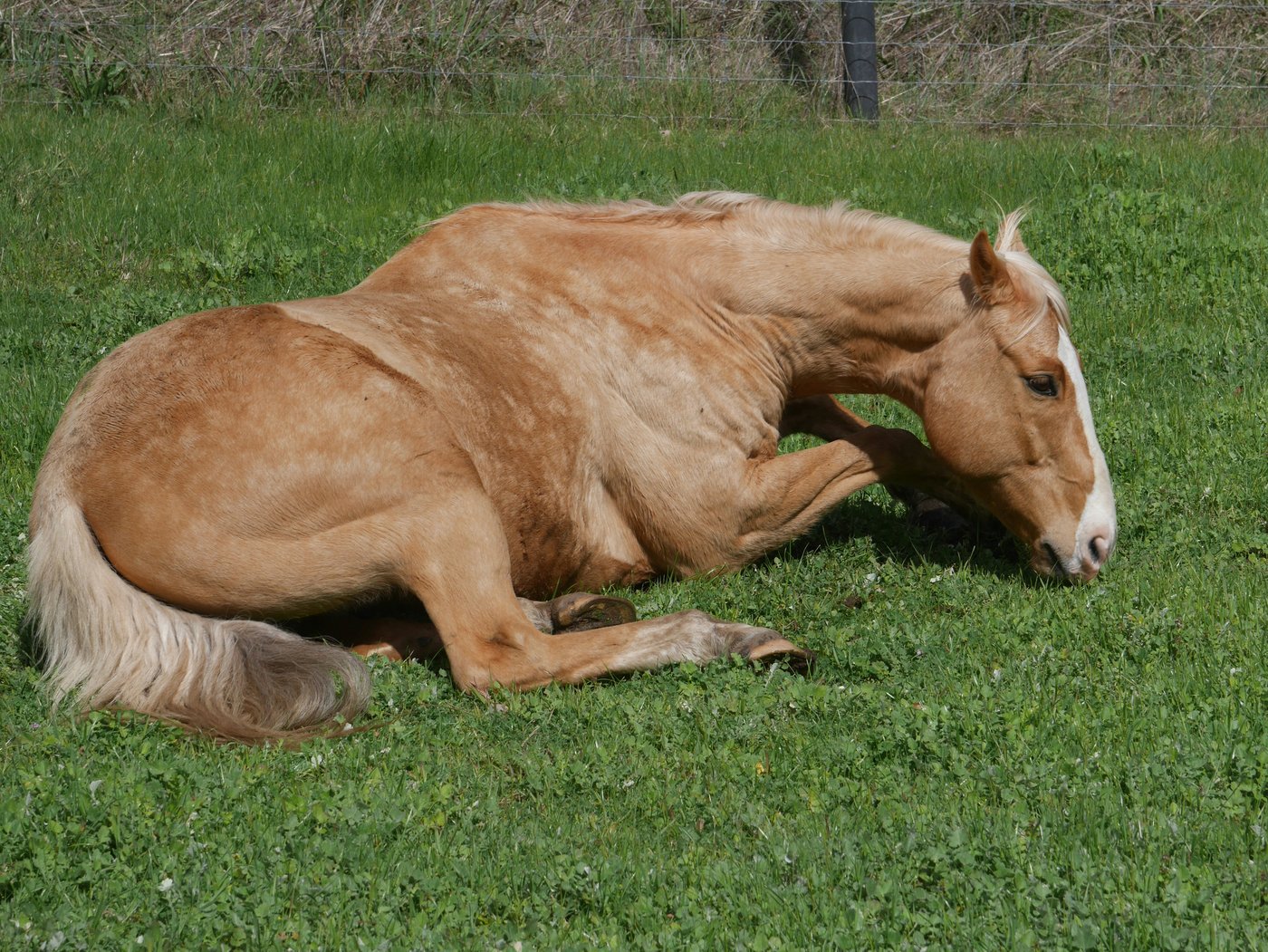
- Restlessness, lying down and getting up repeatedly
- Pawing with the front legs
- Looking or kicking at the belly
- Flehmen (raising the upper lip and stretching the neck)
- Refusing food
- Fewer or smaller fecal balls, dry or slimy manure
Clear signs of colic:
- Rolling and uncontrolled roll-overs
- Cold sweat without physical exertion (sign of shock)
- Sawhorse stance or dog-sitting posture: the latter is highly pathognomonic for problems in the proximal small intestine
- Stretched-out neck, severe restlessness or apathy
- Elevated pulse: normal is 28–44/min, over 48–50 = warning sign, over 60 = emergency
- Pale, bluish or reddened mucous membranes
- Absent or greatly reduced gut sounds
Emergency criteria (call the vet immediately, even at night):
- Persistent violent rolling despite movement
- Pulse over 60 beats/min
- Heavy, cold sweating and trembling
- Bluish discoloration of the mucous membranes (cyanosis)
- Collapse or inability to rise
- Dog-sitting posture
Immediate steps: what you can do as an owner
Step 1: Call the vet, always and right away. Every minute counts in severe cases. The prognosis worsens the longer a colic that needs surgical treatment goes untreated [5].
Step 2: Remove feed and water. Keep the horse from eating more or drinking large amounts of water, which can make the situation worse.
Step 3: Stop the horse from rolling violently. Don't generally prevent the horse from lying down, but uncontrolled rolling can lead to self-injury. The old teaching that rolling causes an intestinal twist is considered controversial. More recent studies suggest that horses with an existing intestinal twist roll for relief. In practice: letting the horse lie quietly is okay, but gently stop violent rolling to prevent injury.
Step 4: Lead the horse at a walk in a controlled way. Calm leading (10–15 minutes) can relieve mild spasms. But don't force a severely painful horse to walk.
Step 5: Write down vital signs. Document pulse, respiratory rate, mucous membrane color, temperature and capillary refill time (CRT). Normal values: pulse 28–44/min, respiratory rate 8–16/min, temperature 37.5–38.2 °C, CRT under 2 seconds, mucous membranes pink and moist.
What you should NOT do:
- Don't give any medication without instructions from your vet (pain medication masks clues for the diagnosis)
- Don't give oils or home remedies
- Don't wait around with a “it'll pass” attitude.
Veterinary diagnostics: how the vet finds the cause
The vet starts with a thorough clinical exam: heart and respiratory rate, mucous membrane color, gut sounds, pain level. Targeted follow-up procedures come next [3]:
Rectal exam: The vet palpates the abdominal organs through the rectum. Impactions, displacements and painful sections of bowel can be identified directly.
Nasogastric tube: A tube is passed through the nostril into the stomach. Fluid that has built up in the stomach can be drained (this prevents gastric rupture), and laxatives can be given.
Abdominal ultrasound: Shows thickened bowel walls, fluid accumulation, bowel displacements and motility.
Abdominocentesis: The color, cell count and protein content of the abdominal fluid give signs of inflammation, such as peritonitis, and of circulatory problems.
Blood work: Hematocrit (dehydration), lactate (tissue damage), inflammation markers.
A complete initial work-up typically takes 60–90 minutes and gives a basic assessment of whether medical treatment is enough or emergency surgery is needed.
Treatment: medical or surgical
About 75–80% of colic cases are mild and respond well to medical treatment, and only about 4% require emergency surgery [2]. Depending on the cause, the vet uses:
Pain medication and antispasmodics: Flunixin meglumine or metamizole for pain relief, butylscopolamine for cramps. Buscopan compositum combines butylscopolamine with metamizole, so it relieves both cramps and pain.
Important practical notes:
- Butylscopolamine temporarily raises the pulse by 20–40 beats/min for 20–30 minutes (parasympatholytic effect). Tell the vet on the phone that Buscopan was given.
- Flunixin meglumine masks clinical signs of pain for 8–12 hours. With a colic suspected to be surgical, give no flunixin meglumine before referral to the equine hospital [4]. The hospital needs the true clinical picture for the surgery decision.
Fluid therapy: Intravenous fluids stabilize the circulation and support movement through the intestines.
Laxatives and enemas: Mineral oil (liquid paraffin) or sodium sulfate (Glauber's salt) via the stomach tube for impactions.
Surgery: If conservative therapy does not work or there is a strangulating displacement/torsion, emergency surgery is the only option. Overall mortality in surgically treated colic is about 34%, with an 82% survival rate for nonstrangulating displacements [5]. Every hour counts.
After surgery comes inpatient monitoring for 7–10 days, with perioperative antibiotics for 24–72 hours [9], pain management and gradual reintroduction of feed.
Prognosis: quick action makes the difference
Horses with mild to moderate colic that are treated within the first hours have an excellent prognosis. The overall mortality from colic is 0.5–0.7 deaths per 100 horse-years [2][7][8]. The case fatality rate is 4–13%, depending on the population and access to treatment [2][6][7][8].
The longer the pain lasts, the higher the pulse and the paler the mucous membranes, the worse the outlook without surgical intervention. The first two hours are decisive for your horse's chance of survival.
Prevention: how to reduce colic risk
Colic cannot be prevented completely, but you can lower the risk significantly [1][2]:
- Continuous forage access: Hay ad libitum or spread over several portions throughout the day. Long gaps between meals promote gastric ulcers and impactions.
- Make feed changes slowly: Plan at least 10–14 days. The gut microbiota needs time to adjust.
- Regular dental checks: At least once a year. Sharp tooth edges prevent thorough chewing. In senior horses, a look at the incisors is part of the check too (EOTRH).
- Enough water: At least 20–40 l per day. In winter, offer warmed water or mash.
- Parasite control: Strategic deworming based on fecal sample analysis (in German). Excessive parasite infection is associated with an increased colic risk [1]. Resistance patterns and licensed products are regional. The fecal egg count logic transfers, the product names do not.
- Stress reduction: Changing barns, transport and heavy training loads increase colic risk [2].
- Exercise: Regular turnout and free movement promote gut motility.
Watch high-risk horses especially closely:
- Mares in the first two months after foaling (cecal inversion, large colon volvulus) [1][11]
- Horses that have had colic before (recurrence risk clearly increased)
- Horses with confirmed gastric ulcers (EGUS)
- Horses on long-term NSAID medication (right dorsal colitis) [10]
Bottom line
Colic is the emergency every horse owner fears, and rightly so. But panic doesn't help: spotting it quickly, acting right away and giving the right first aid save lives. Learn the warning signs, know your horse's vital signs and keep your vet's number handy. About 75–80% of colic cases are mild and can be treated conservatively if they are caught in time. And with a well-thought-out feeding and management strategy, you can significantly lower the risk from the start.
Frequently asked questions about colic in horses
How long does colic last in horses?
That depends heavily on the type. Many mild spasmodic and gas colics respond quickly to treatment and heal without lasting effects. About 75–80% of colic cases are mild and can be treated with medication [2]. The first two hours are decisive: the longer the pain continues, the pulse stays high and the mucous membranes are pale, the worse the outlook without surgery. After surgery, inpatient monitoring of 7–10 days follows [9].
What exactly is colic in horses?
Colic is the umbrella term for abdominal pain in horses [3]. It is a symptom with many possible causes, from spasm to gas and impaction to displacement or torsion. Anatomy makes the horse especially vulnerable: the digestive tract, about 30 m long, is only partly freely suspended, which favors displacements and twists. Colic is one of the most common life-threatening emergencies in equine practice [2][6][7][8].
How does colic develop and what causes it?
The most common types are spasmodic colic caused by stress, a sudden change of diet or a change in the weather, gas colic caused by hard-to-digest feed or a disturbed gut microbiota, and impaction colic, usually in the area of the pelvic flexure of the large colon. Causes of impactions include dehydration, too little forage, poor dental care or too much sand in the feed. On sandy soils, sand can build up in the large intestine over months and trigger sand colic. Displacements and torsions are the most severe, because they cut off the blood supply [5].
How can I tell if my horse has colic?
Early warning signs are restlessness, lying down and getting up frequently, pawing, looking or kicking at the belly, flehmen, refusing feed, and less or drier manure [3]. Clear signs of colic are rolling, cold sweat without exertion, a sawhorse stance or dog-sitting posture, a raised pulse and pale or bluish mucous membranes. The following count as an emergency: persistent violent rolling, a pulse over 60 beats per minute, heavy cold sweating, bluish discoloration of the mucous membranes or inability to rise. In these cases, call your vet right away, even at night.
What should I do right away if my horse has colic?
Always call your vet immediately, because in severe cases every minute counts [5]. Remove feed and water so your horse doesn't keep eating or drink large amounts. Lying quietly is okay. To protect against self-injury, you should carefully prevent violent rolling, and controlled walking in hand for 10–15 minutes can relieve mild cramps. Write down the vital signs for your vet, such as pulse, respiratory rate, mucous membrane color and temperature.
Can I give my horse medication, oils or home remedies for colic?
No, don't give any medication without instructions from your vet, because pain medication masks important diagnostic clues. You also shouldn't give oils or home remedies yourself. For homeopathic remedies or herbs for colic, the sources reviewed here contain no evidence. Your vet always decides on treatment after an exam. Waiting it out with an attitude of “it'll be fine” is dangerous with colic.
Which medications does the vet use for colic?
Depending on the cause, pain medications such as flunixin meglumine or metamizole are used, as well as butylscopolamine for spasms. For impactions, laxatives such as mineral oil (liquid paraffin) or sodium sulfate (Glauber's salt) can be given via stomach tube, and an infusion stabilizes the circulation. Important: if your horse was given Buscopan, tell your vet, because it temporarily raises the pulse by 20–40 beats per minute. Flunixin meglumine should not be given before a possible referral to an equine hospital, because it masks the clinical picture for 8–12 hours [4].
What are the chances of survival with colic?
Horses with mild to moderate colic that are treated within the first hours have an excellent prognosis, and roughly 75–80% can be treated conservatively [2]. Overall mortality from colic is 0.5–0.7 deaths per 100 horse-years, and case fatality is 4–13% depending on the population [2][6][7][8]. Surgery also offers a good outlook, with a survival rate of about 82% for non-strangulating displacements [5]. Every hour counts, so acting quickly and talking to your vet early is decisive.
How can I prevent colic?
You can lower the risk significantly, even though colic can never be prevented completely [1][2]. Provide continuous access to forage, change feed slowly over at least 10–14 days and offer enough water, at least 20–40 l per day. This also includes dental checks at least once a year, strategic deworming based on a fecal sample, stress reduction and enough exercise. Horses that have had colic before have a higher risk of recurrence and should be watched especially closely.
This article does not replace advice from your vet.
Sources
- [1] Kaneene JB, Miller R, Ross WA, Gallagher K, Marteniuk J, Rook J - Risk factors for colic in the Michigan (USA) equine population. Prev Vet Med 1997. PMID 9234409. https://pubmed.ncbi.nlm.nih.gov/9234409/
- [2] Tinker MK et al. - Prospective study of equine colic incidence and mortality. Equine Vet J 1997. PMID 9413717. https://pubmed.ncbi.nlm.nih.gov/9413717/
- [3] Merck Veterinary Manual - Colic in Horses. https://www.merckvetmanual.com/horse-owners/digestive-disorders-of-horses/colic-in-horses
- [4] TiHo Hannover - Klinik für Pferde, Chirurgie und Orthopädie. https://www.tiho-hannover.de/kliniken-institute/kliniken/klinik-fuer-pferde/
- [5] Sutton GA et al. - Initial investigation of mortality rates and prognostic indicators in horses with colic in Israel: a retrospective study. Equine Vet J 2009. PMID 19642409. https://pubmed.ncbi.nlm.nih.gov/19642409/
- [6] Kaneene JB, Ross WA, Miller R - The Michigan equine monitoring system. II. Frequencies and impact of selected health problems. Prev Vet Med 1997. PMID 9234436. https://pubmed.ncbi.nlm.nih.gov/9234436/
- [7] Traub-Dargatz JL et al. - Estimate of the national incidence of and operation-level risk factors for colic among horses in the United States, spring 1998 to spring 1999. J Am Vet Med Assoc 2001. PMID 11439773. https://pubmed.ncbi.nlm.nih.gov/11439773/
- [8] Hillyer MH, Taylor FG, French NP - A cross-sectional study of colic in horses on thoroughbred training premises in the British Isles in 1997. Equine Vet J 2001. PMID 11469771. https://pubmed.ncbi.nlm.nih.gov/11469771/
- [9] Salem SE, Proudman CJ, Archer DC - Prevention of post operative complications following surgical treatment of equine colic: Current evidence. Equine Vet J 2016. PMID 26440916. https://pubmed.ncbi.nlm.nih.gov/26440916/
- [10] MacAllister CG et al. - Comparison of adverse effects of phenylbutazone, flunixin meglumine, and ketoprofen in horses. J Am Vet Med Assoc 1993. PMID 8420909. https://pubmed.ncbi.nlm.nih.gov/8420909/
- [11] Reeves MJ, Gay JM, Hilbert BJ, Morris RS - Association of age, sex and breed factors in acute equine colic: A retrospective study of 320 cases admitted to a veterinary teaching hospital in the U.S.A. Prev Vet Med 1989. https://doi.org/10.1016/0167-5877(89)90006-8
All medical statements in the text are linked to the matching source in this list with inline markers [N]. This article does not replace advice from your vet.